
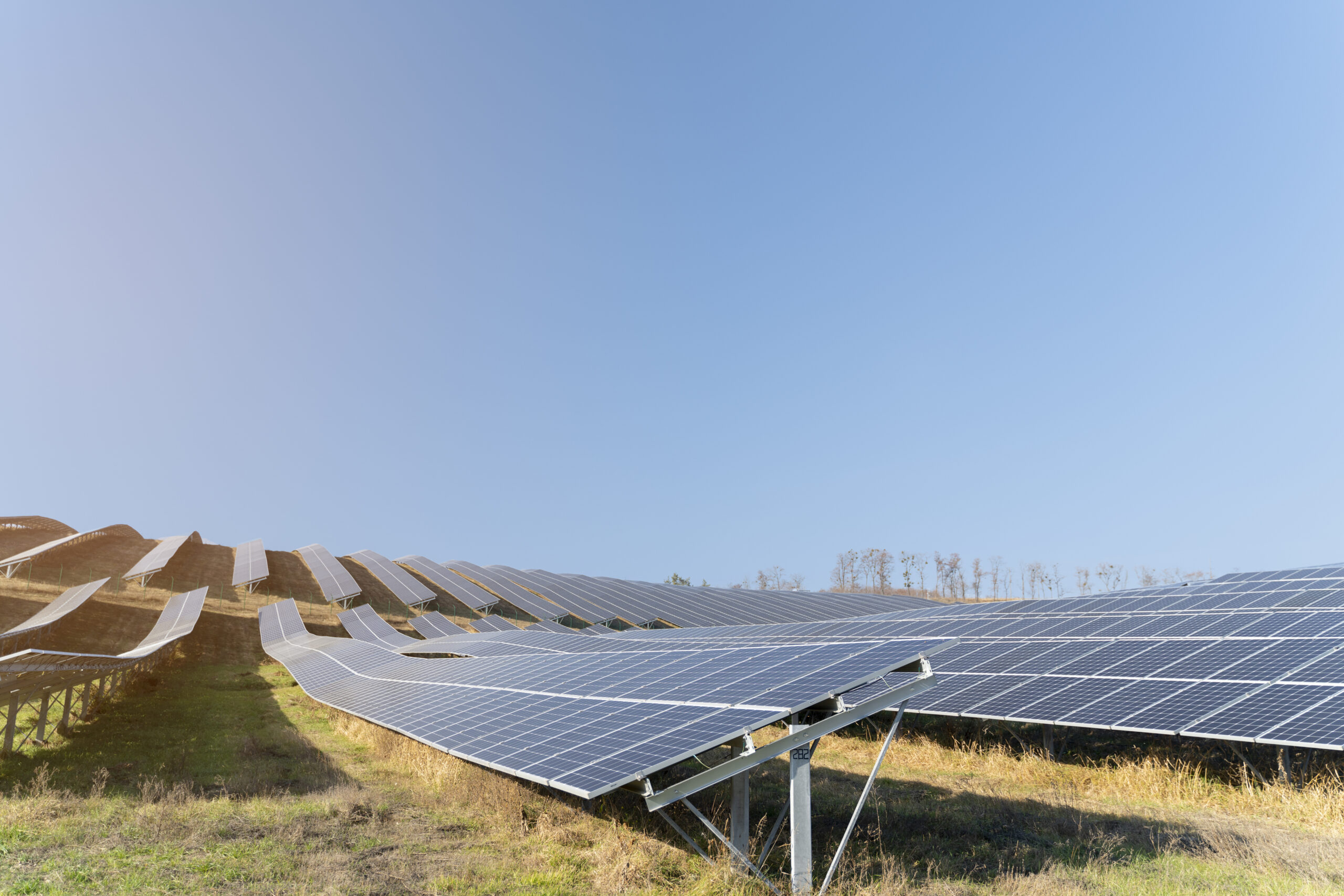
The story of solar energy is one of humanity’s most remarkable technological journeys, from rudimentary experiments with photovoltaic effects in the 19th century to powering entire nations in the 21st. Today, as the world grapples with climate change and energy security, solar power has emerged not just as an alternative, but as the fastest-growing source of new electricity generation globally.
In 2025, this revolution reached unprecedented heights: the world added 380 gigawatts (GW) of new solar capacity in just the first half of the year—a staggering 64% increase over the same period in 2024. To put this in perspective, it took until September 2024 to reach 350 GW of installations, but in 2025, this milestone was achieved by June. Solar generation grew by 30% in 2024 alone, adding 475 terawatt-hours (TWh) and meeting 40% of the global increase in electricity demand.
But this isn’t just a story about gigantic numbers and global trends. It’s equally a story about Nigeria, a nation standing at the crossroads of its energy future, where solar power is transitioning from a niche technology to an essential lifeline for millions.
The Global Journey: From Silicon Cells to Terawatts
The Early Years: Understanding the Photovoltaic Effect
The foundation of solar energy was laid in 1839 when French physicist Alexandre Edmond Becquerel discovered the photovoltaic effect—the generation of electric current when certain materials are exposed to light. However, it wasn’t until 1954 that Bell Laboratories created the first practical silicon solar cell with about 6% efficiency. Initially, these cells were prohibitively expensive, finding their first application in space satellites where cost was secondary to reliability.
The Technological Breakthrough: From 15% to 26% Efficiency
The real transformation began in the 2000s with dramatic improvements in cell technology and manufacturing processes. Traditional monocrystalline and polycrystalline silicon cells have evolved significantly, with modern panels routinely achieving 20-22% efficiency. The industry has witnessed a rapid technological evolution:
PERC (Passivated Emitter and Rear Cell) Technology: This design optimisation dominated with nearly 60% market share by 2023, improving light absorption and reducing electron recombination losses.
TOPCon (Tunnel Oxide Passivated Contact): The latest advancement is gaining momentum, with manufacturers retooling their plants to achieve over 70% market share in 2024. TOPCon technology pushes efficiency beyond 25% while maintaining cost competitiveness.
Bifacial Modules: These panels capture sunlight from both sides, increasing energy yield by 10-30% depending on installation conditions—particularly effective in regions with high ground reflectivity.
The technical sophistication extends beyond the panels themselves. Modern inverters now achieve conversion efficiencies exceeding 98%, with string inverters, microinverters, and hybrid solutions offering flexibility for different system architectures.
The Economics Revolution: When Solar Became Cheaper than Coal
Perhaps the most significant milestone in solar’s evolution has been its economic transformation. Global module prices fell by approximately 15% per year through 2024, with average U.S. module prices reaching $0.31 per watt-peak (W_dc) by Q2 2024. Solar photovoltaic energy now costs between 3-6 cents per kilowatt-hour (kWh), compared to 5-17 cents per kWh for fossil fuels.
This price collapse has been driven by several factors:
- Manufacturing Scale: China’s massive production capacity has driven economies of scale, with the country accounting for 55-64% of global installations.
- Supply Chain Optimization: Polysilicon production costs have plummeted from over $40/kg in the mid-2000s to under $10/kg today.
- Automation and Process Innovation: Modern solar cell manufacturing facilities operate with unprecedented efficiency and minimal human intervention.
- Battery Storage Cost Decline: Solar battery storage costs have fallen by 72% since 2015, with utility-scale battery costs now at $65/MWh outside China and the U.S., making dispatchable solar economically feasible.
The 2024-2025 Surge: Breaking All Records
The recent explosion in solar deployment tells a story of momentum that defies conventional energy transition timelines. In 2024, the world installed a record 597 GW of solar power—a 33% surge over 2023. By late 2024, the world crossed the 2 terawatt (TW) threshold of total installed solar capacity. Projections suggest the world could be installing 1 TW of solar per year by 2030.
Regional Breakdown:
- China: Added 329 GW in 2024 alone (55% of global installations), with an estimated 256 GW in H1 2025
- India: Recorded 24 GW in H1 2025 (49% increase over H1 2024), with total capacity reaching 132.85 GW by November 2025
- United States: Added 21 GW in H1 2025 (4% increase year-on-year)
- Europe and Americas: Growing by 15% and 40% respectively in 2024
Solar generation in 2024 surpassed 2,000 TWh globally, with the technology meeting 40% of the growth in electricity demand. In the European Union, solar generation exceeded coal for the first time, with its share in the generation mix exceeding 10%. China, the USA, and India are forecast to cross the 10% threshold in the coming three years.
The Technical Challenge: Grid Integration and Flexibility
As solar’s share of electricity generation grows, managing its variability becomes critical. The industry is addressing this through:
Advanced Forecasting: Machine learning algorithms now predict solar generation with remarkable accuracy, enabling grid operators to anticipate fluctuations.
Battery Energy Storage Systems (BESS): Lithium-ion and increasingly lithium iron phosphate (LiFePO₄) batteries are being paired with solar installations, with global battery storage capacity growing by over 300% in some markets.
Smart Grid Technologies: Bi-directional inverters, vehicle-to-grid (V2G) integration, and demand response systems are transforming grids from passive distribution networks to active management platforms.
Hybrid Systems: Combining solar with wind, hydro, or conventional generation provides baseload stability while maximizing renewable penetration.
However, challenges remain. Curtailment levels and instances of negative electricity prices have been increasing in many markets, signaling the urgent need for grid flexibility investments and energy storage solutions.
Now To The African Context: A Continent Bathed in Sunlight
Africa possesses perhaps the world’s greatest solar resource, with vast regions receiving 4.5-6.5 kWh/m²/day, capacity factors 40-60% higher than many European sites. Yet, the continent added only 2.5 GW of new solar capacity in 2024, representing modest growth compared to global trends.
The distribution remains highly concentrated: South Africa and Egypt represented almost 80% of all new solar installed in Africa in 2024 (50% and 29% respectively). However, 2025 marked a turning point, with Africa recording a 54% increase in solar capacity over 2024, the strongest year for solar energy growth on the continent.
African Solar Landscape in 2024:
- Total installed capacity: 19.2 GW (excluding residential installations)
- New installations: 2.5 GW (third consecutive year above 2 GW)
- Growth drivers: South Africa maintaining “Gigawatt Club” membership, Egypt’s utility-scale projects, and emerging markets in West Africa
The Central African Republic leads the ranking of countries where solar contributes the most to the overall electricity mix, with more than 40% of grid electricity originating from solar—a testament to solar’s potential even in smaller economies.
Africa’s solar imports from China rose 60% in the last 12 months, indicating growing deployment, though lack of official installation data still obscures the actual pace of solar adoption on the continent.
Nigeria’s Solar Revolution
The Energy Crisis Context
 Solar cell farm in power station for alternative energy from the sun[/caption]
Nigeria’s power sector presents a stark paradox: a nation with 200 million people and a GDP approaching $500 billion produces only about 5,000 MW of electricity annually. With up to 16 GW of installed capacity, production often reaches only one-third of potential due to gas supply constraints, aging infrastructure, and transmission bottlenecks.
More than 80 million Nigerians still lack access to electricity, and even those with grid connections face frequent blackouts. Natural gas dominates the electricity mix at roughly 75%, with hydropower accounting for most of the remainder. This underperformance costs the nation dearly, the World Bank estimates Nigeria loses 5-7% of its GDP annually (approximately $25 billion) due to poor electricity access.
Households and small businesses spend an average of $12 billion each year operating backup diesel generators. For commercial and industrial (C&I) users, fuel costs exceed $0.30/kWh, making solar displacement economics compelling.
The Solar Surge: Numbers That Tell a Story
Nigeria’s solar journey accelerated dramatically in 2024-2025, driven by a perfect storm of economic and policy factors:
Capacity Growth:
- 2024: Added 63.5 MW of new solar capacity, bringing total installed capacity to 385.7 MW
- 2025: Added 803 MW of new capacity (141% year-on-year growth), reaching approximately 1.19 GW
- Ranking: 4th in Africa for solar adoption in 2024, rising to 2nd largest solar market in Africa by 2025
Import Statistics:
- H1 2024: Solar panel imports valued at ₦206.82 billion
- H1 2025: Solar panel imports surged to ₦242.68 billion (17.29% increase)
- Solar panels accounted for 2.20% of Nigeria’s total merchandise imports of ₦10.99 trillion in H1 2025
- 2023: Over 4 million solar panels imported, valued at $200 million
- 2025 (early): Solar panel imports reached ₦125.29 billion
Market Value and Projections:
- 2024 market value: Over $600 million
- Projected annual growth: 15-20%
- Renewable energy capacity: Growing from 3.13 GW in 2024 to projected 5.01 GW by 2029 (9.88% CAGR)
- Long-term outlook: Some projections suggest growth to 14.07 GW by 2031 (25.58% CAGR)
Import Sources (H1 2025):
- China: ₦173.15 billion (71.38% of total solar imports)
- UAE: ₦28.69 billion
- India: ₦16.82 billion
The Subsidy Removal Effect: A Catalyst for Change
The removal of petrol subsidies in 2023 fundamentally altered Nigeria’s energy economics. With fuel prices skyrocketing, the comparative economics of solar became undeniable. What was once a premium “green” choice became a financially rational decision for households and businesses alike.
The Africa Solar Industry Association (AFSIA) noted: “Nigeria has started feeling the positive impact of the fuel subsidy removal and an increased interest for solar+storage as a cheaper alternative to diesel.”
This shift is evident in the distribution of installations. Off-grid installations, private mini-grids, solar home systems, and commercial rooftop systems accounted for approximately 1.15 GW—around 96% of Nigeria’s total installed solar capacity by 2025. This reflects chronic weaknesses in the national grid and the pragmatic adoption of decentralized energy solutions.
Technical Deployment: How Nigeria is Going Solar
Nigeria’s solar deployment spans multiple segments, each with distinct technical characteristics:
- Utility-Scale Projects: While still representing a minority of installations, utility-scale solar is gaining traction. The 2024 duty exemptions on inverters and batteries have improved project economics. Typical power purchase agreements (PPAs) span 20 years at fixed tariffs below $0.15/kWh, providing cost predictability for manufacturers in Lagos, Kano, and Port Harcourt who procure power directly from on-site renewables.
Technical Specifications:
- Capacity: 5-50 MW per installation
- Module technology: Predominantly monocrystalline PERC and emerging bifacial panels
- Mounting: Fixed-tilt or single-axis tracking systems
- Inverters: Central inverters (500 kW – 3 MW capacity)
- Commercial & Industrial (C&I) Solar: This segment has seen explosive growth as businesses seek to avoid grid outages and volatile diesel prices. Systems range from 50 kW rooftop installations to multi-megawatt ground-mounted arrays.
Case Study – Vawell Power Solutions Projects:
- Adidas Flagship Store: 100 kVA 11/0.4 kV transformer installation with integrated low-voltage panels
- NICON Inverter System: 50 kW Deye three-phase inverter with 30 × 5.12 kWh LiFePO₄ batteries and 50 kWp Mono PERC 615W solar array
- Private Lekki Residence: 50 kW hybrid inverter solution with 44.3 kWp solar rooftop system integrated with low-voltage panels
- Reeveshire Apartments: 500 kVA 11/0.4 kV transformer with complete low-voltage distribution infrastructure
- Solar Mini-Grids: Mini-grids provide reliable energy supply to rural and peri-urban communities, translating to measurable improvements in quality of life. A 2024 study of customers in Kenya and Nigeria found that mini-grid connections improved productivity, income, health, safety, and gender equality while cutting kerosene use. The median income of Nigerian participants showed significant gains in job and enterprise opportunities.
Technical Configuration:
- Capacity: 10-500 kW
- Components: Solar array, battery storage (typically lithium-ion or LiFePO₄), diesel genset backup, AC distribution network
- Load management: Smart metering with prepaid systems
- Monitoring: Remote monitoring via GSM/satellite connectivity
- Solar Home Systems (SHS): The Rural Electrification Agency (REA) has deployed over 1 million solar home systems through the World Bank-funded Nigeria Electrification Programme (NEP), electrifying over 7.8 million Nigerians. The REA estimates that at least 5 million off-grid solar systems are required to serve underserved communities.
System Sizes:
- Tier 1: 10-50W (basic lighting and phone charging)
- Tier 2: 50-200W (TV, fans, multiple lights)
- Tier 3: 200-500W (refrigeration, power tools)
- Tier 4: 500W+ (full household electrification)
The numbers from 2024-2025 demonstrate that Nigerians are already voting with their wallets: 803 MW of new capacity added in 2025, ₦242.68 billion in solar panel imports, and a market growing at 15-20% annually. From Lagos to Kano, from private homes to commercial enterprises, from mini-grids in rural communities to rooftop systems in urban centers, solar is transforming how Nigeria generates and consumes power.
The technical capabilities exist. The economic case is compelling. The policy framework is evolving. What remains is execution—turning potential into performance, projects into power, and aspirations into reality.
This is where the rubber meets the road. Where technical knowledge combines with practical experience. Where global trends meet local expertise.
This is where Vawell Power Solutions comes in.
Power Your Future with Vawell: Excellence at Work
Since 2019, Vawell Power Solutions has been at the forefront of Nigeria’s renewable energy revolution, delivering over 300 successful projects across households, commercial properties, and SMEs. We don’t just install solar panels—we design, implement, and maintain comprehensive energy solutions that deliver reliability, savings, and independence.
Why Choose Vawell for Your Solar Journey?
- Proven Track Record Our portfolio speaks for itself:
- Major retail installations: 100kVA transformer systems for flagship stores (Adidas)
- Commercial hybrid solutions: 50kW inverter systems with advanced battery storage (NICON)
- Residential excellence: Complete solar rooftop systems with seamless grid integration (Private Lekki residence)
- Large-scale infrastructure: 500kVA transformer installations with full electrical distribution (Reeveshire Apartments)
- End-to-End Turnkey Solutions We handle every aspect of your solar project:
- Site assessment and energy audit: Detailed analysis of your consumption patterns and solar potential
- Custom system design: Engineered specifically for your needs, not one-size-fits-all templates
- Equipment procurement: Direct partnerships with world-class OEMs (Legrand, L&T, Schneider Electric, ABB, Siemens)
- Professional installation: Certified engineers and technicians with proven expertise
- Testing and commissioning: Comprehensive system validation before handover
- Training and documentation: Your team learns to understand and monitor the system
- After-sales support: 24/7 technical support and rapid-response maintenance teams
- Technology Excellence We work exclusively with premium, proven technologies:
- Solar Panels: Tier 1 monocrystalline and bifacial modules (>21% efficiency)
- Inverters: Deye, SMA, Fronius, and other top-tier hybrid inverters
- Battery Storage: LiFePO₄ batteries with 6,000+ cycle lifespans and advanced BMS
- Monitoring Systems: Real-time mobile app access to your system’s performance
- Safety Systems: Full surge protection, earthing, and fire safety compliance
- Comprehensive Service Offerings
Renewable Energy Solutions:
- Grid-tied solar systems
- Off-grid solar installations
- Hybrid systems (solar + grid + generator backup)
- Solar mini-grids for estates and communities
- Battery energy storage systems (BESS)
Electrical Testing & Installations:
- Industrial electrical installations
- Transformer supply, installation, and maintenance
- Low-voltage and medium-voltage panels
- Power quality analysis and harmonic mitigation
- Preventive maintenance programs
- Financial Flexibility We understand that every client’s financial situation is unique:
- Equipment financing options: Partnerships with financial institutions
- PPA structures: For commercial clients seeking zero upfront investment
- Transparent pricing: Detailed quotations with no hidden costs
- Quick Turnaround Time One of our core values is delivering on time, every time:
- Rapid response: Initial assessment within 48 hours of contact
- Fast design: System design and quotation within 5-7 business days
- Efficient execution: Most residential systems installed within 2-3 weeks
- Commercial projects: Managed with detailed timelines and milestone tracking
- Local Expertise with Global Standards
- Based in Nigeria: We understand local regulations, climate conditions, and market dynamics
- International partnerships: Access to global best practices and technology innovations
- Certified professionals: Engineers trained to international standards (PV Solar professional certifications)
- Compliance focus: All installations meet Nigerian Electricity Regulatory Commission (NERC) standards
Our Process: From Consultation to Commissioning
Step 1: Free Energy Audit Contact us for a no-obligation assessment. Our engineers will:
Step 2: Custom System Design We create a solution tailored to your specific needs:
Step 3: Detailed Proposal You receive a comprehensive quotation including:
Step 4: Professional Installation Our certified installation team:
Step 5: Testing & Commissioning Before system handover:
Step 6: Ongoing Support Our commitment doesn’t end at installation:
Success Stories from Our Clients
“When we gave out the contract for our electrical installations, we didn’t expect the quickness with which Vawell delivered. They didn’t just deliver on time; they made sure the quality was top-notch.” — Ifeoma Onyebuchi, Abuja
“Vawell exceeded our expectations with a seamless solar install – quick, reliable, and professional!” — Adebayo O., Lagos
“I was genuinely impressed with their quick response time and after-sales service. Their agents are always available to respond to your every concern.” — Daudu M., Ogun
Ready to Power Your Future?
The energy revolution is here. The technology is proven. The economics are compelling. The question is not whether to go solar, but when—and who to trust with this critical investment.
At Vawell Power Solutions, we combine technical expertise, premium equipment, professional installation, and comprehensive support to deliver solar systems that perform year after year, delivering clean, reliable, cost-effective power.
Don’t let another blackout disrupt your life or business. Don’t spend another naira on expensive diesel. Don’t wait for the grid to improve.
Take control of your energy future today.
Contact Vawell Power Solutions
Lagos Office: 28 Alh. Kehinde Street, Abule-Egba, Lagos, Nigeria
Phone: +234 (0) 811 111 0102
Email: vawellpower@gmail.com info@vawellpower.com
Website: www.vawellpower.com
Request a Quote: https://vawellpower.com/request-quote
Visit Our Store: store.vawellpower.com
Follow Us: Stay updated on the latest energy trends, project showcases, and technology insights on our blog: vawellpower.com/blog